Traditional home decor blends architectural heritage with refined comfort, anchoring interiors through symmetry, quality craftsmanship, and time-honored materials that create spaces designed to last generations rather than seasons. This approach to design draws from 18th and 19th-century European influences, particularly English and French aesthetics, where formal balance meets lived-in warmth. The resurgence you’re witnessing isn’t nostalgia for its own sake. It represents a countermovement to the stark minimalism and fast-turnover trends that dominated the past decade, offering instead a deliberate return to permanence and collected character.
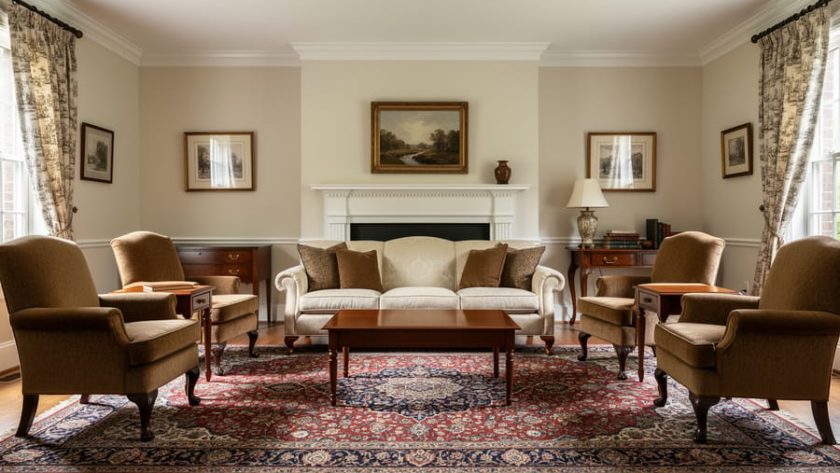
What distinguishes traditional style from mere period reproduction is its confident layering. Crown molding frames walls adorned with classic art. Persian rugs anchor furniture arrangements centered on conversation rather than screens. Wood tones, from rich mahogany to warm cherry, bring organic depth that engineered materials simply can’t replicate. Upholstery in damask, toile, or subtle florals adds pattern without overwhelming the eye, while antique or antique-inspired pieces contribute the patina of history.
The appeal extends beyond aesthetics. Traditional interiors offer psychological grounding in an era of constant digital flux, creating rooms that feel intentionally composed rather than algorithmically curated. Understanding the principles behind this enduring style allows you to adapt its elements authentically, whether you’re committing to a full-room transformation or selectively incorporating traditional anchors into a more eclectic home. The key lies in knowing which foundational elements define the style and how to balance formality with the comfort modern living demands.
The New Traditional: What’s Driving the Revival
The pandemic shifted something fundamental in how we relate to our homes. After years of minimalist mantras and the stark aesthetic of fast furniture, homeowners are craving environments that feel rooted rather than temporary. Traditional home decor answers that hunger with substance, pieces built to last generations, materials that develop character with age, and design principles refined over centuries rather than seasons.
The numbers tell part of the story. With the home decor market to reach $862.18B in 2026, a significant portion of that growth comes from consumers deliberately choosing investment pieces over disposable trends. They’re visiting antique markets, commissioning upholsterers to restore heirloom chairs, and seeking out craftspeople who still turn furniture legs by hand. This isn’t nostalgia for its own sake. It’s a recognition that mass production often sacrifices the details that make a space feel genuinely lived in.
The appeal runs deeper than aesthetics. Research shows that design can shape emotions and traditional interiors offer something many contemporary spaces lack: visual weight and emotional resonance. A mahogany secretary desk carries stories. A Chesterfield sofa grounds a room with its deliberate presence. These aren’t merely objects but anchors in a world that increasingly feels untethered.
There’s also rebellion in the choice. As algorithm-driven design pushes everyone toward identical gray couches and floating shelves, traditional style allows for personality and peculiarity. You can layer Persian rugs over sisal, mix English antiques with French Provincial, display grandmother’s china alongside contemporary art. The rulebook is thick, but it permits interpretation in ways that trend-cycle decorating never could. Traditional design whispers permanence in an era exhausted by constant reinvention.
Defining Characteristics of Traditional Home Decor
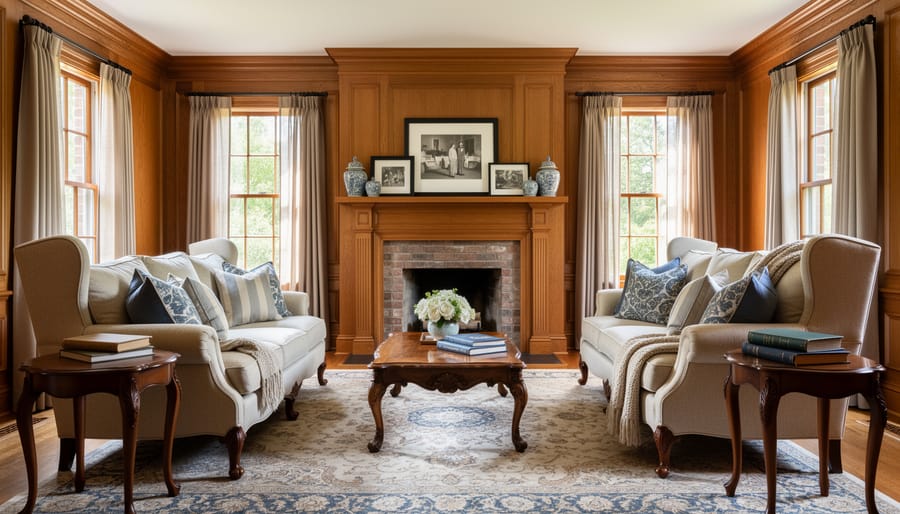
Furniture and Architectural Elements
Traditional furniture serves as the foundation of any classically-inspired room, with pieces that speak to craftsmanship and enduring design. Look for wingback chairs with tight upholstery, Chesterfield sofas featuring deep button tufting, and dining tables crafted from solid mahogany or cherry wood. These aren’t merely functional items, they’re investment pieces that develop character over decades of use.
Architectural details transform ordinary rooms into spaces with genuine presence. Crown molding adds visual weight where walls meet ceilings, while baseboards ground the room with substantial proportions, typically six inches or taller. Wainscoting brings texture and dimension to dining rooms and hallways, creating a classic framework that works beautifully with both neutral and saturated wall colors.
Built-in cabinetry deserves particular attention in traditional spaces. Floor-to-ceiling bookcases with adjustable shelving, window seats with paneled fronts, and china cabinets with glass-front doors all contribute to that collected-over-time aesthetic that makes traditional interiors feel complete rather than decorated.
The fireplace remains central to traditional design, serving as both focal point and gathering spot. Proper fireplace sizing ensures the mantel becomes a natural anchor for the room, with adequate proportions to support decorative elements above while maintaining visual balance with surrounding furniture. Stone or brick surrounds, carved wood mantels, and brass andirons complete the picture, creating warmth that extends beyond the physical heat they provide.
Color Palettes and Fabric Choices
The traditional color palette draws from centuries of refined taste, favoring depth and warmth over stark minimalism. Rich burgundies, forest greens, and navy blues create a sense of permanence, while cream, caramel, and soft gold tones provide luminous contrast. These aren’t fleeting color trends, they’re hues that have graced distinguished homes for generations because they age gracefully and complement natural materials like wood and stone.
Jewel tones and damasks remain hallmarks of traditional elegance, bringing texture and visual richness to upholstery and window treatments. Emerald velvet on a wingback chair, sapphire silk drapery panels, or ruby damask throw pillows add layers of sophistication that synthetic materials simply can’t replicate. The weight and drape of quality fabrics, think heavy linens, wool brocades, and cotton chintz, contribute to the substantial, enduring feel traditional spaces are known for.
Fabric patterns in traditional design tend toward classic motifs: florals, paisleys, stripes, and toiles that reference historical textile traditions. These aren’t busy or chaotic when properly scaled and balanced. A large floral on draperies might pair with a subtle stripe on upholstery and a solid velvet on accent pieces, creating visual interest without overwhelm.
The key to successful traditional color and fabric choices lies in quality over quantity. Invest in fewer pieces made from genuine materials, real silk, pure wool, high-thread-count cotton, rather than filling rooms with synthetic alternatives. A single well-chosen damask pillow carries more weight than a sofa covered in polyester pretending to be something it isn’t. Traditional design rewards patience and discernment in these foundational selections.
Traditional Meets Contemporary: The Modern Interpretation
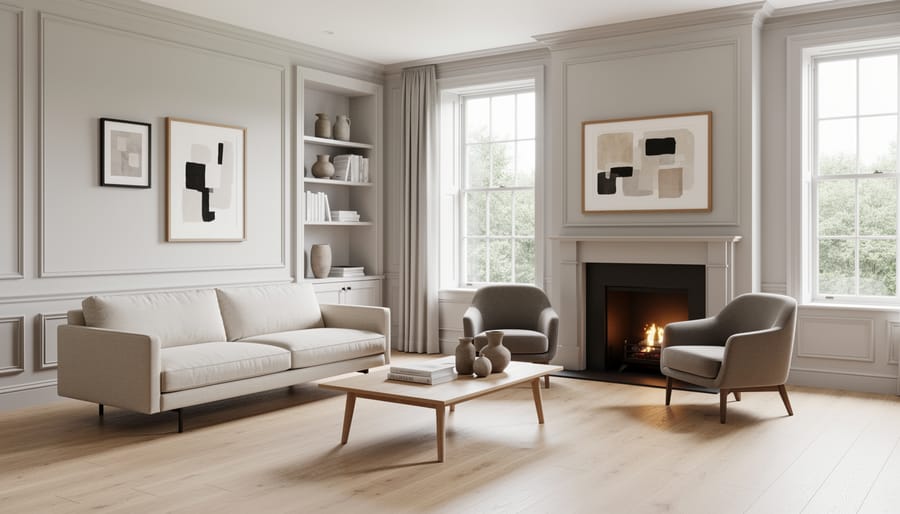
The revolution happening in traditional design isn’t about abandoning its principles, it’s about liberation from the rigid rules that once made these spaces feel like museum exhibits. Designers in 2026 are dismantling the notion that traditional style requires complete period accuracy or suffocating formality, instead cherry-picking beloved elements and pairing them with unexpected partners.
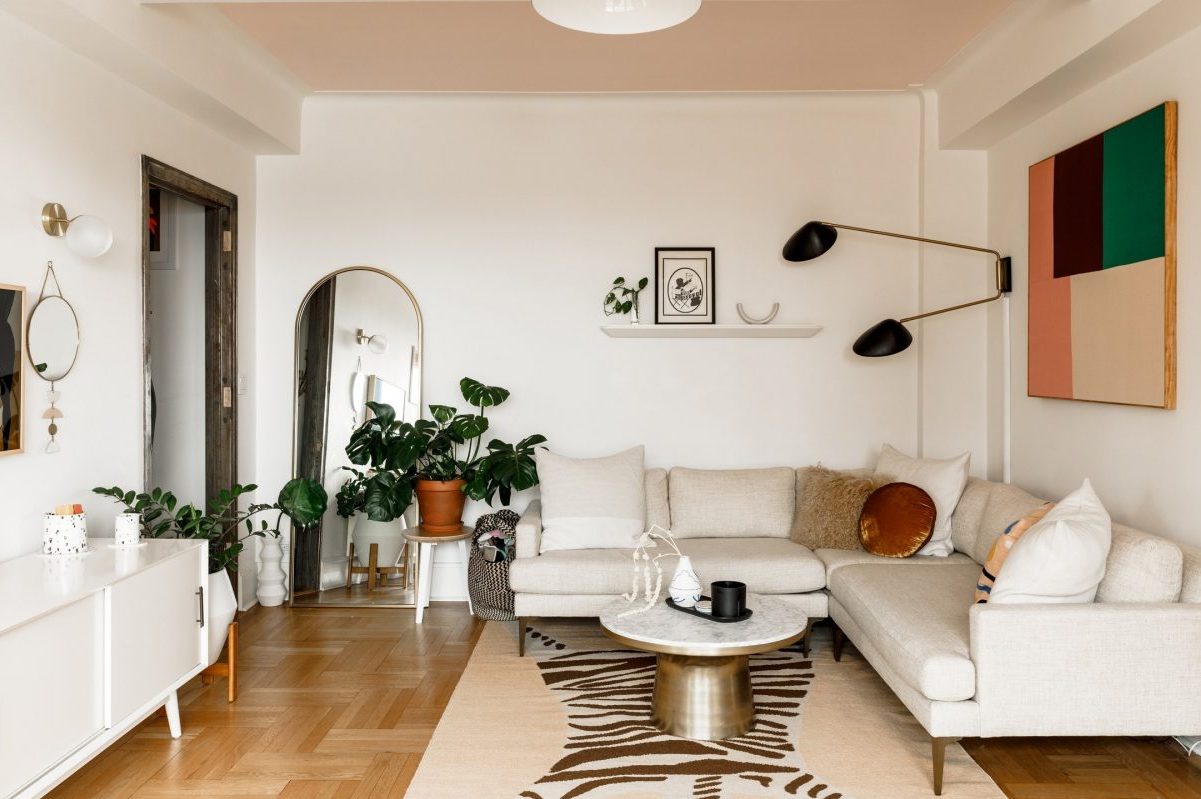
This evolved approach prioritizes comfort and livability without sacrificing sophistication. A classic Chesterfield sofa now wears performance velvet in a saturated emerald rather than stiff brocade. Ornate crown molding frames walls painted in soft, airy neutrals instead of heavy jewel tones. The gilt mirror your grandmother treasured hangs above a sleek console table with clean lines, creating visual tension that feels fresh rather than confused.
The key shifts transforming traditional design for contemporary life include:
- Pairing inherited antiques with abstract contemporary art or sculptural modern pieces
- Replacing heavy, dark color schemes with lighter palettes anchored by warm neutrals
- Editing accessory collections down to statement pieces rather than cluttered vignettes
- Updating furniture scale to suit today’s more casual, open floor plans
- Incorporating smart home technology discreetly within traditional architectural details
Strategic editing has become the defining characteristic of modern traditional spaces. Where traditional rooms once displayed every inherited treasure and decorative object, today’s interpretation exercises restraint. A single spectacular chandelier commands attention in a dining room with minimal competing elements. Thoughtful corner styling might feature one sculptural urn on a pedestal rather than a crowded arrangement of porcelain figurines.
The fabric story has evolved significantly too. While traditional design still embraces pattern and texture, the application feels lighter and more breathable. Designers layer a classic damask or toile selectively, perhaps on accent chairs or throw pillows, while anchoring the room with solid linens and cottons in contemporary silhouettes. Drapery treatments maintain traditional fullness but often eliminate fussy swags and jabots in favor of simpler headers that puddle elegantly on the floor.
This balance between heritage and modernity explains why traditional design resonates so powerfully right now. It offers the substance, craftsmanship, and visual richness people crave while acknowledging how we actually live, with streaming devices, open kitchens, and a preference for gathered comfort over stiff formality.
Room-by-Room Traditional Design Applications
Living and Dining Spaces
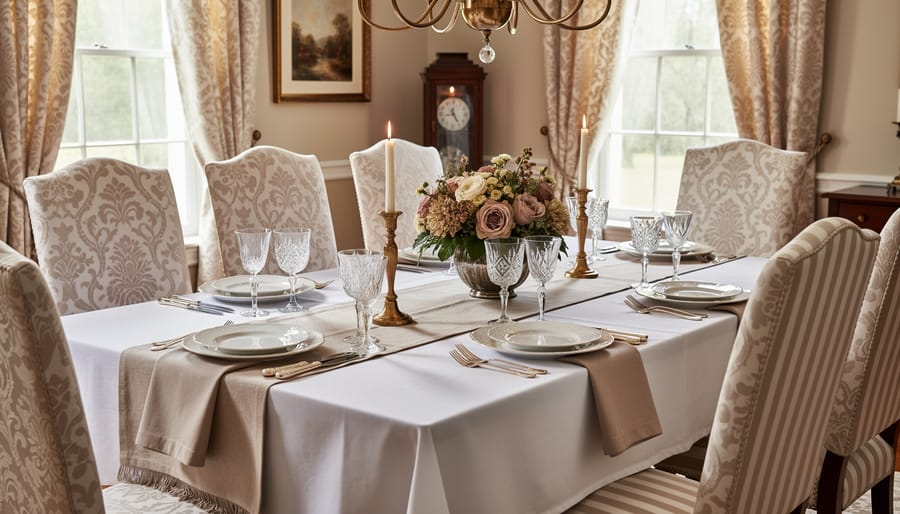
Traditional living and dining rooms serve as the heart of the home, where formal gatherings and daily life intersect. The key to authentic traditional design in these spaces lies in creating conversational furniture arrangements rather than perimeter-hugging layouts. Position a sofa and paired armchairs around a substantial coffee table, angling pieces slightly inward to encourage interaction. In dining rooms, center your table beneath a statement chandelier, crystal, brass, or wrought iron depending on your home’s architectural period, allowing 30 to 34 inches between the table surface and fixture base.
Layer your lighting thoughtfully. Combine ambient chandelier light with table lamps on side tables and buffets, using warm-toned bulbs and fabric shades to create the soft, welcoming glow traditional rooms demand. Avoid recessed lighting as a primary source; it reads too contemporary.
Ground these spaces with area rugs large enough that front furniture legs rest on them, this anchors groupings and defines zones in open layouts. Traditional patterns like Persian, Aubusson, or Turkish designs work beautifully, but ensure the scale suits your room size.
Window treatments deserve substantial investment. Full-length drapes in rich fabrics, velvet, silk, damask, hung from decorative rods or covered by upholstered cornices add architectural weight and finished polish. Finish with carefully curated accessories: framed artwork in gilded frames, ceramic table lamps, silver or brass candlesticks, and fresh flowers in classic vessels.
Bedrooms and Private Retreats
Traditional bedrooms succeed by prioritizing comfort without sacrificing refinement. Start with a substantial upholstered headboard in linen or velvet, paired with a classic wooden bedframe in mahogany or cherry. Layer the bed generously, quality cotton sheets topped with a matelassé coverlet, then a quilted duvet and coordinating shams. Add throw pillows in complementary patterns like toile or damask, building texture through varied fabrics rather than excessive quantity.
Bedside tables should be functional pieces with drawers for storage, topped with ceramic or brass table lamps that provide warm, adjustable light. A sitting area with an upholstered chair and small side table creates a retreat within the retreat, perfect for morning coffee or evening reading. Window treatments matter enormously here, lined drapery panels in rich fabric provide both privacy and that essential feeling of enclosure that makes bedrooms truly restful.
For traditional guest room ideas apply these same principles but edit slightly for versatility. A dresser with mirror serves dual purpose as storage and dressing space, while a luggage rack and full-length mirror add practical hospitality. Keep personal items minimal, letting the quality of the furniture and textiles convey welcome rather than clutter.
Kitchens and Functional Areas
Traditional kitchens balance heritage aesthetics with contemporary demands for efficiency and comfort. The key lies in architectural detailing rather than superficial decoration, crown molding that reaches substantial proportions, furniture-style cabinetry with inset doors and visible hinges, and deep baseboards that ground the space. Natural wood finishes in cherry, walnut, or painted finishes in cream, sage, or soft gray establish period authenticity while accommodating modern appliances.
Functional areas like mudrooms, laundry rooms, and butler’s pantries benefit from traditional built-in cabinetry with practical subdivisions, cubbies, hooks at proper heights, and drawer organizers that maintain order without visible clutter. These spaces work best when they echo the kitchen’s material palette and trim details, creating architectural continuity throughout service areas.
Hardware choices matter enormously in traditional kitchens. Cup pulls in bronze or brass, bin pulls for drawers, and substantial knobs on cabinet doors reference historical precedent while providing comfortable daily use. Lighting should combine ambient fixtures, perhaps a painted iron chandelier over a central island, with task lighting concealed under cabinets, preserving the room’s refined character while meeting modern visibility needs.
Sourcing and Investing in Traditional Pieces
Finding quality traditional pieces requires patience and a discerning eye, but the investment pays dividends in both aesthetic satisfaction and lasting value. The most rewarding sources often lie outside conventional furniture showrooms.
Estate sales and auctions remain treasure troves for authentic period pieces. You’ll find furnishings with genuine provenance, pieces that have lived in homes for decades and carry the craftsmanship of earlier eras. Look for solid wood construction, dovetail joinery, and hand-carved details that signal quality. Bring measurements and photographs of your space; the excitement of an auction can lead to impulsive purchases that don’t fit your rooms or existing furnishings.
The best traditional pieces aren’t bought, they’re chosen with intention, becoming anchors that define a room’s character for generations rather than seasons.
For those wondering where to buy furniture that balances traditional design with reliable quality, established retailers specializing in classic styles offer the advantage of consistency and customer service. These sources typically provide pieces inspired by historical periods but constructed with modern durability standards.
Artisan craftspeople and custom furniture makers deserve consideration when budget allows. A commissioned piece built to your specifications using traditional techniques can become a family heirloom. Visit workshops, examine their portfolios, and discuss wood selection and finishing options. Custom work costs more upfront but delivers exactly what your space needs.
Antique dealers curate selections with expertise, though expect to pay for their knowledge and sourcing efforts. They can authenticate pieces, explain restoration needs, and often guarantee authenticity, valuable when investing in significant furniture.
Whatever your source, prioritize pieces that solve functional needs first. A beautiful Chippendale dining table means nothing if it doesn’t seat your family comfortably. Traditional style works best when furnishings serve daily life rather than existing as decorative statements. Buy fewer pieces of higher quality; traditional design rewards restraint and careful selection over abundance.
The resurgence of traditional home decor in 2026 isn’t just another passing trend cycling through the design world. It represents something more fundamental: a collective reaching toward permanence in an era of constant flux. When we surround ourselves with well-crafted furniture, thoughtful architectural details, and time-honored design principles, we’re creating spaces that feel deliberately chosen rather than algorithmically suggested.
This movement toward traditional style reflects our deeper needs for beauty that endures, craftsmanship that tells a story, and rooms that feel genuinely lived-in rather than staged for social media. The anticipated market growth to $862.18 billion in 2026 confirms what designers have been observing: people are investing in homes that offer emotional sanctuary, not just aesthetic novelty.
Whether you’ve already begun incorporating traditional elements or you’re just discovering the appeal of this enduring approach, remember that authentic traditional design unfolds gradually. It’s built through thoughtful acquisition, careful arrangement, and the patience to let a room develop its character over time.
For ongoing inspiration and expert guidance on traditional design, subscribe to our monthly newsletter. You’ll receive curated insights, exclusive content from leading designers, and practical advice for creating spaces with lasting beauty and meaning.