Minimalist home decor transforms your living space into a sanctuary of intentional beauty by stripping away visual clutter and celebrating only what serves a clear purpose or brings genuine joy. This design philosophy centers on clean lines, neutral palettes, and thoughtfully curated pieces that create calm, functional environments where every item earns its place. Rather than deprivation, minimalism offers liberation from the exhausting cycle of accumulation and maintenance that defines conventional decorating.
The approach has evolved far beyond the stark, cold interiors that once defined the aesthetic. Contemporary minimalism in 2026 embraces warmth through organic textures, natural materials, and carefully considered layers that prevent spaces from feeling sterile. The key lies in understanding that minimalism isn’t about owning the least, but about owning exactly what aligns with how you actually live.
Successful minimalist interiors share several defining characteristics: generous negative space that allows the eye to rest, a restrained color palette that creates visual harmony, and furniture with sculptural quality that doubles as functional art. These spaces prioritize quality over quantity, investing in fewer pieces built to last rather than filling rooms with disposable trends.
The philosophy extends beyond aesthetics into lifestyle benefits that resonate with growing numbers of homeowners seeking refuge from oversaturation. Simplified spaces reduce decision fatigue, streamline daily routines, and create environments that support focus rather than fragment attention. This practical appeal, combined with undeniable visual elegance, explains why minimalism continues to gain momentum among design enthusiasts and first-time decorators alike.
Understanding the core principles makes implementation straightforward, whether you’re redesigning a single room or reimagining your entire home.
The Philosophy Behind Minimalist Home Decor
Minimalist home decor isn’t about deprivation or stark austerity. It’s a deliberate design philosophy rooted in intentionality, every object in a room should earn its place through purpose, beauty, or emotional resonance. Unlike decorating trends that layer pattern and ornament, minimalism asks you to consider what truly matters in your living environment.
The ‘less is more’ principle, coined by architect Ludwig Mies van der Rohe, remains the movement’s foundation. But this doesn’t mean creating empty rooms. It means choosing a single sculptural vase over three decorative ones, or selecting one exceptional sofa that defines the space rather than filling it with mismatched seating. Each piece becomes more visible, more appreciated, when it isn’t competing for attention.
Functionality drives every decision in authentic minimalist spaces. A coffee table isn’t just a surface, it might offer hidden storage or double as seating. A lighting fixture provides illumination while serving as the room’s focal point. This integration of form and function creates environments that feel effortless rather than contrived.
The philosophy also embraces negative space as an active design element. Empty walls, clear surfaces, and breathing room between furniture aren’t voids to fill, they’re intentional choices that allow your eye to rest and your mind to settle. This spatial generosity transforms how you experience a room, shifting focus from visual noise to thoughtful composition.
Curating meaningful pieces distinguishes minimalism from mere decluttering. You’re not randomly discarding possessions; you’re actively selecting items that enhance daily life and reflect personal values. A handcrafted ceramic bowl, a vintage leather chair, or a abstract painting becomes more significant when it’s given space to shine rather than hidden among clutter.
Essential Elements of Minimalist Interiors
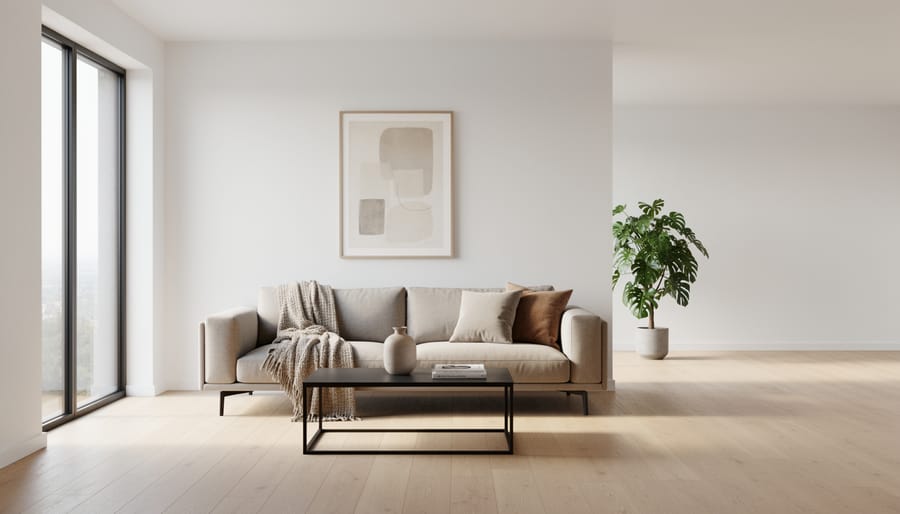
Color and Light
Minimalist interiors thrive on the interplay between restrained color choices and abundant natural illumination. The foundation typically rests on whites, warm beiges, and soft gray paint colors that recede rather than demand attention, allowing architecture and light to become the room’s primary visual events. This isn’t about sterile emptiness, thoughtfully chosen neutrals create a canvas where texture and shadow gain significance.
White space functions as an active design component, not merely the absence of objects. Walls left intentionally bare direct the eye to carefully placed furnishings, while negative space around each piece gives it breathing room and visual weight. Some designers explore obscure colors like muted sage or dusty terracotta as subtle accent points, introducing warmth without fracturing the cohesive palette.
Natural light becomes the room’s most dynamic element, shifting throughout the day to animate surfaces and define spatial boundaries. Large, unadorned windows maximize natural light for openness while sheer fabrics diffuse harsh rays without blocking them entirely. Strategic placement of reflective surfaces, polished stone, glass, brushed metal, amplifies available light, making even compact rooms feel expansive.
Furniture with Purpose
In minimalist interiors, furniture transcends mere utility to become sculptural anchors that define the room’s character. Each piece earns its place through dual credentials: impeccable form and genuine function. The traditional sofa, dining table, or storage unit sheds ornamental excess in favor of honest materials and proportions that honor the human body and the surrounding space.
When selecting furniture for a minimalist home, consider these essential qualities:
- Clean, geometric silhouettes without unnecessary embellishment or decorative carving
- Exposed joinery that celebrates craftsmanship rather than concealing construction
- Proportions that balance visual lightness with structural integrity
- Neutral or natural finishes that age gracefully and complement evolving palettes
- Versatility that allows pieces to serve multiple roles or adapt to changing needs
Quality decisively trumps quantity in this aesthetic. A single exceptional dining table in solid walnut with a hand-rubbed finish carries more design weight than a matched suite of forgettable pieces. Look for furniture with visible grain patterns, honest joinery, and construction methods that promise decades of service. The investment philosophy mirrors the visual one: fewer, better, longer-lasting pieces create spaces that resist obsolescence and develop patina rather than showing wear.
Multi-functional designs deserve particular attention. Ottoman storage, expandable tables, and modular seating systems honor the minimalist mandate to do more with less, proving that restraint and practicality need not conflict.
Textures and Materials
Minimalist spaces sidestep visual monotony through layered textures that speak to the senses. A room stripped of ornamental excess finds its personality in the grain of reclaimed oak flooring, the cool weight of marble countertops, or the weave of a linen throw draped across a sofa. These materials don’t shout, they whisper depth.
Natural wood brings warmth and organic variation, whether in a walnut dining table or white-washed pine shelving. Stone surfaces, terrazzo, travertine, concrete, anchor spaces with gravitas while reflecting light in subtle ways. Metals like brushed brass or matte black steel add architectural crispness to fixtures and hardware. Textiles matter enormously: a chunky wool rug, raw silk curtains, or canvas cushions introduce softness that prevents rooms from feeling austere.
The skill lies in restraint. Select two or three dominant materials per room, then let their inherent beauty do the work. A bedroom might pair oiled teak furniture with crisp cotton bedding and a sisal rug, enough contrast to engage the eye without competing for attention. This tactile approach transforms minimalism from stark to soulful.
Room-by-Room Approach to Minimalist Design
Living Spaces That Breathe
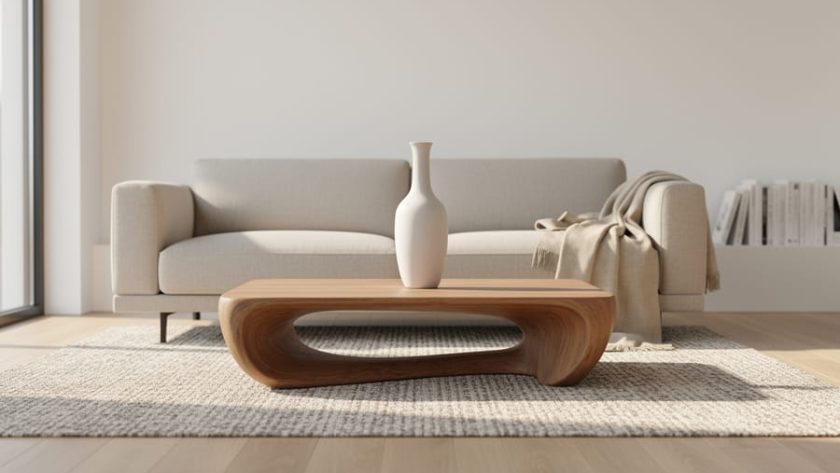
The living room sets the tone for your entire home, making it the perfect space to demonstrate minimalist principles in action. Start with a single statement sofa in a neutral tone, think oatmeal linen or warm grey, and anchor it with a low-profile coffee table that offers clean lines without visual weight. Resist the urge to fill every corner; instead, create intentional breathing room that allows each piece to shine.
Decluttered surfaces are non-negotiable. Limit your coffee table to one carefully chosen object, a sculptural bowl, a single art book, or a simple vase with fresh greenery. Side tables should remain mostly bare, perhaps holding just a table lamp with an understated silhouette. Wall space benefits from the same restraint: one substantial piece of art makes a stronger statement than a gallery wall ever could.
When selecting accessories, apply the “one meaningful item per surface” rule. That handwoven throw draped casually over your sofa adds texture and warmth without creating clutter. A floor plant in the corner softens hard edges while maintaining the airy feel. The key is choosing pieces with presence and purpose, then giving them the space to be noticed.
Serene Bedrooms and Bathrooms
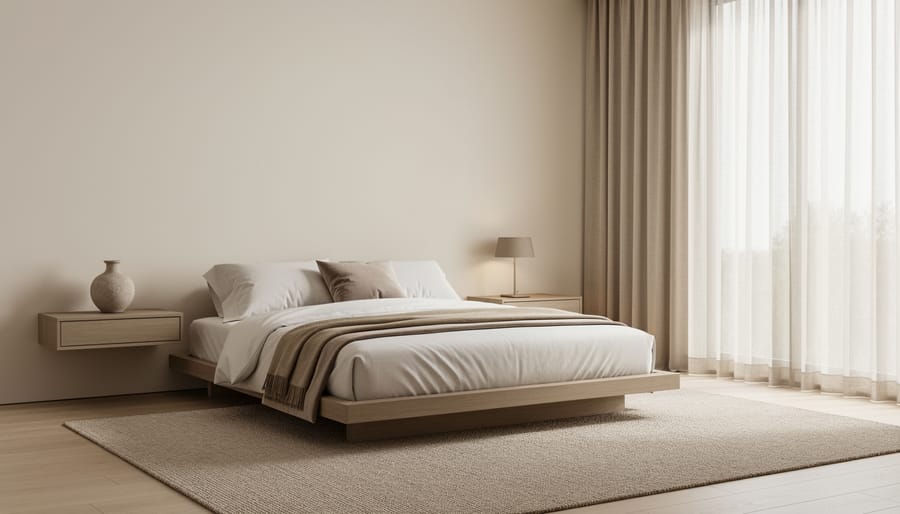
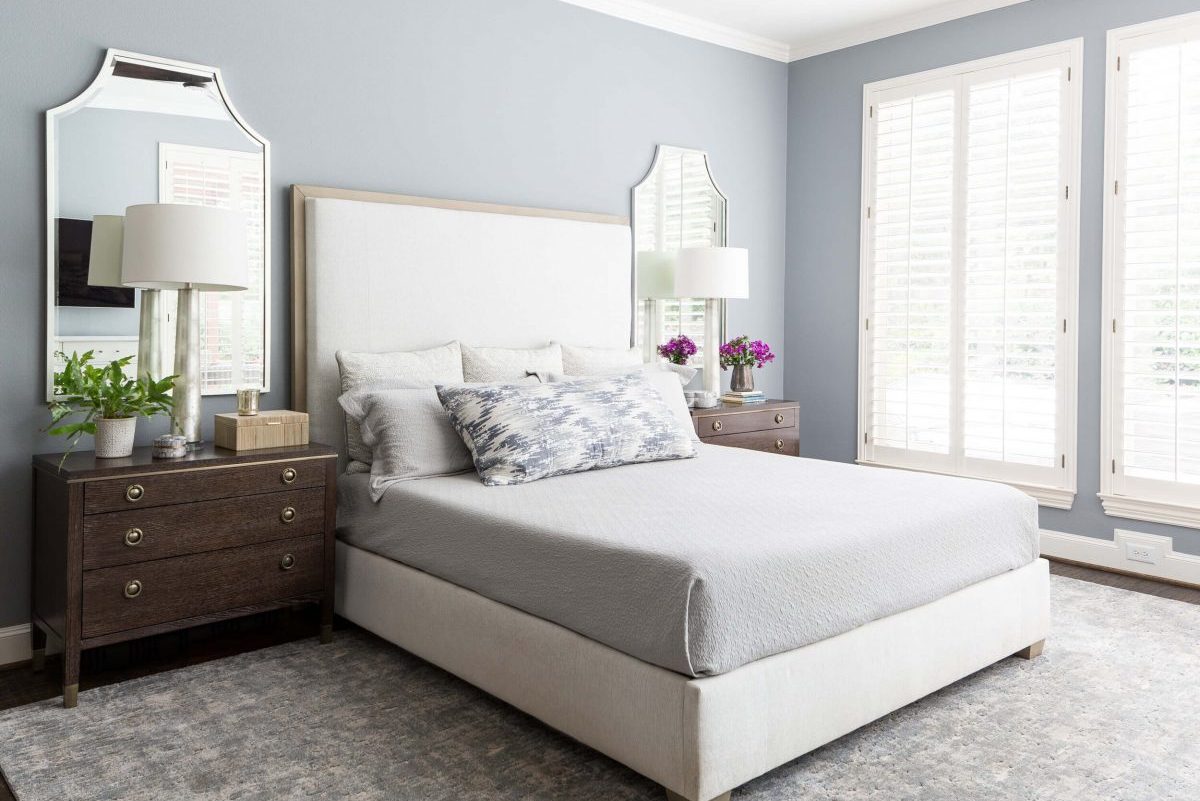
Bedrooms and bathrooms offer the greatest opportunity to embrace minimalism’s restorative power. In these intimate spaces, simplified palettes create the foundation for true rest, think soft whites, warm greys, or muted earth tones that quiet visual noise. The bed itself becomes a focal point through quality linens in natural fabrics, while nightstands hold only essentials: a single lamp, perhaps one cherished book.
Hidden storage transforms these rooms from cluttered to calm. Built-in wardrobes with flush doors disappear into walls. Under-bed drawers conceal seasonal items. In bathrooms, recessed medicine cabinets and floating vanities with concealed compartments keep counters bare, allowing the architecture and materials to speak.
Spa-like simplicity emerges through intentional restraint. A freestanding tub needs no surrounding decor. Open shelving displays a few folded towels in matching tones. Natural materials, stone tiles, wooden bath mats, ceramic vessels, provide texture without competition. The result isn’t stark emptiness but spaciousness that lets you breathe, rooms designed for genuine relaxation rather than visual stimulation.
Functional Kitchens and Dining Areas
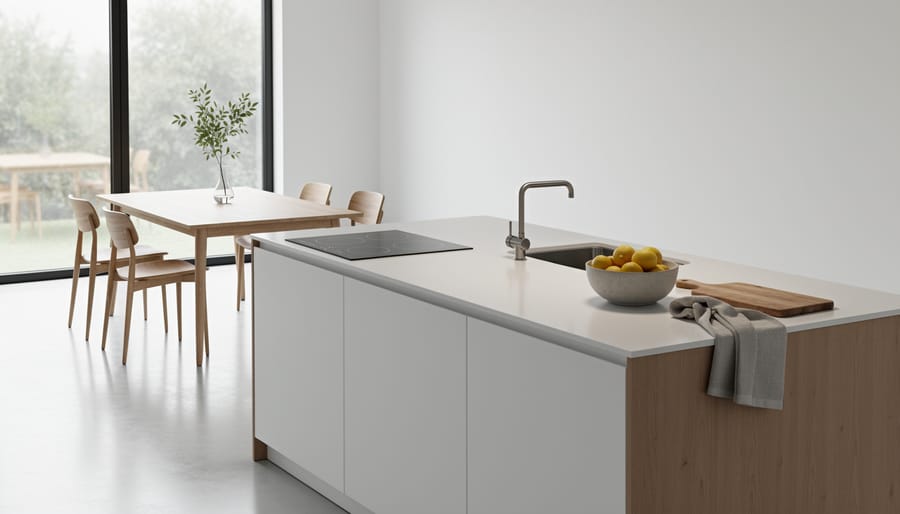
Kitchens demand a different strategy than display-focused rooms. The working reality of cooking, spices, oils, utensils, appliances, threatens minimalist ideals unless you plan for concealment from the start. Prioritize closed cabinetry that extends to the ceiling, eliminating dust-catching gaps while maximizing storage capacity. Choose integrated appliances that disappear behind matching panels. Keep countertops completely clear except for one or two everyday essentials; designate zones within cabinets for frequently used items so retrieval stays effortless.
In dining areas, select tables with simple silhouettes in wood or stone that don’t compete for attention. A single statement pendant light can define the space without additional decoration. Store table linens, serving pieces, and seasonal items in closed sideboards rather than open shelving. The goal isn’t a kitchen devoid of personality but one where function flows smoothly beneath a calm surface, where the act of preparing and sharing meals takes center stage rather than the stuff surrounding it.
Curating Your Minimalist Collection
Building a minimalist collection requires a discerning eye and patience, each piece should earn its place through genuine utility or aesthetic contribution. Start by identifying gaps in functionality rather than filling empty surfaces. Ask whether an object solves a problem, enhances daily rituals, or brings you sustained visual pleasure. If it fails all three tests, it doesn’t belong.
Quality trumps quantity in every category. A single well-crafted dining table will outlast and outperform three mediocre ones, both functionally and visually. Invest in materials that age gracefully: solid wood that develops character, metals that patina beautifully, and natural fibers that soften with use. Contemporary designers who work with marble and recycled materials often create pieces that embody minimalist values while bringing textural depth to spare interiors.
Vintage and secondhand sources offer treasures that new retail rarely matches. Mid-century pieces particularly align with minimalist sensibilities through their clean lines and functional focus. Auctions and estate sales reward those who know what they’re seeking, arrive with measurements, a clear budget, and willingness to walk away. A pristine credenza from the 1960s carries both history and craftsmanship that mass production can’t replicate.
Resist the urge to furnish a space completely in one shopping spree. Living with intentional emptiness reveals what you actually need versus what convention suggests you should have. You might discover that a reading corner needs only a chair and lamp, not the side table and throw pillows Pinterest insists upon.
When evaluating potential additions, consider their visual weight. Even functional items should maintain the breathing room that defines minimalist spaces. A bulky armchair might be comfortable, but if it dominates a room and disrupts flow, it violates minimalist principles regardless of its utility.
Common Pitfalls and How to Avoid Them
The most common misstep in minimalist design is stripping a space so thoroughly that it feels more clinical than comfortable. When every surface gleams bare and not a single personal item remains visible, you’ve crossed from curated simplicity into unwelcoming sterility. The solution lies in selective warmth: a handwoven throw across the sofa, a carefully chosen piece of art that speaks to you, or a collection of three ceramic vessels in varying heights. These additions don’t compromise the minimalist vision; they humanize it.
Another frequent error is confusing minimalism with deprivation, treating the aesthetic as a set of rigid rules rather than a flexible philosophy. This manifests when homeowners eliminate items they genuinely need or love simply because they don’t fit a preconceived notion of what minimalism should look like. The reality is that a minimalist home should function beautifully for the people living in it. If you cook daily, your kitchen needs the tools that support that practice. If books bring you joy, a streamlined shelf displaying favorites honors both minimalism and your lifestyle.
Pros
- Creates visually calm spaces that reduce mental clutter and stress.
- Simplifies cleaning and maintenance with fewer surfaces and objects.
- Encourages mindful consumption and investment in quality over quantity.
- Offers timeless appeal that transcends seasonal design trends.
Cons
- Can feel cold or impersonal without careful attention to texture and warmth.
- Requires ongoing discipline to maintain clutter-free surfaces.
- May prove challenging in shared households with different organizational preferences.
- Initial quality investments can carry higher upfront costs than mass-market alternatives.
Over-editing represents the third pitfall, where the pursuit of visual perfection creates spaces so precious that they’re uncomfortable to actually inhabit. When you hesitate to place a coffee mug on the table or feel anxious about disrupting the careful arrangement, the design has failed its primary purpose. Combat this by building in functional systems that accommodate real life, a beautiful tray that corrals daily essentials, closed storage for items in rotation, or participation in buy back programs that let you refresh pieces without accumulating excess. Minimalism should create breathing room in your home, not turn living into a museum experience.
Where Minimalist Design Is Heading
Minimalist design continues to mature rather than stagnate, and 2026 marks a pivotal evolution toward approaches that feel more livable and emotionally resonant. The stark, monochromatic spaces that once defined the movement are giving way to interpretations that retain the discipline of intentional curation while embracing warmth and connection.
Warm minimalism has emerged as perhaps the most significant shift. This sub-trend introduces earthy tones, terracotta, warm beiges, soft ochres, alongside the classic neutrals, and favors natural wood in honey and amber tones over cool grays. The result maintains visual calm without the clinical detachment that made earlier minimalism feel unapproachable. Textiles gain prominence here: linen throws, bouclé accent chairs, handwoven rugs that add tactile comfort without visual noise.
Sustainable minimalism aligns the aesthetic with environmental consciousness, emphasizing longevity and provenance. Designers increasingly champion pieces crafted from reclaimed materials, low-impact production methods, and transparent supply chains. This isn’t about buying more “sustainable” items, it’s about buying fewer, better things that carry both aesthetic and ethical weight.
The integration of biophilic elements represents another evolution, softening hard edges with organic forms and living greenery. Sculptural plants become focal points in otherwise restrained rooms, and natural materials like stone and raw wood appear with their inherent irregularities celebrated rather than concealed.
Major design showcases reflect this shift. The 2026 Interior Design Show at the Metro Toronto Convention Centre featured installations that demonstrated these hybrid approaches, showing how minimalism can accommodate personality and warmth. The movement’s trajectory suggests it’s less about purism than thoughtful balance, spaces that breathe but also embrace.
Minimalist home decor isn’t just another fleeting design trend, it’s a deliberate response to how we want to live in spaces that truly serve us. Throughout this exploration, we’ve seen how the philosophy extends far beyond empty surfaces and white walls. It’s about creating environments where every element earns its place, where light and texture do the work of excessive ornamentation, and where the absence of clutter allows room for clarity and calm.
The beauty of minimalism lies in its adaptability. Whether you’re drawn to the warmth of natural materials, the serenity of neutral palettes, or the functionality of multi-purpose furnishings, this approach meets you where you are. It doesn’t demand perfection or austerity. Instead, it invites thoughtful curation, a process that’s deeply personal and endlessly rewarding.
As you begin or continue your minimalist journey, remember that the most successful spaces reflect genuine intention rather than strict adherence to rules. Start with one room, one surface, one deliberate choice. Notice how removing the unnecessary reveals what matters most.
For those seeking ongoing inspiration and expert perspectives on evolving design trends, our monthly newsletter delivers exclusive insights directly from industry professionals and showcases real transformations happening in homes around the world. It’s the perfect companion for anyone committed to creating spaces that breathe, function beautifully, and stand the test of time.