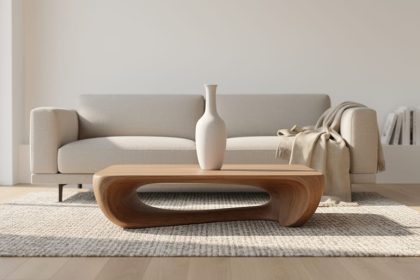
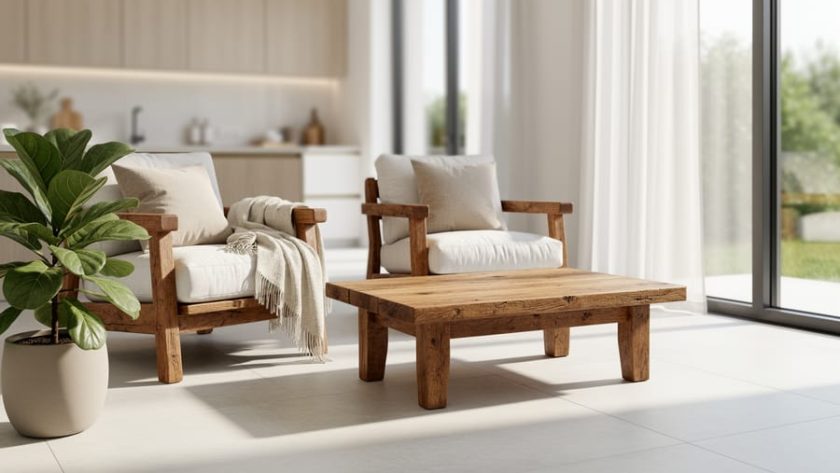
Sustainable design principles are a framework of strategies that minimize environmental impact throughout a product’s or space’s entire lifecycle, from material extraction and manufacturing through use and eventual disposal or reuse. These principles guide designers to create interiors that conserve resources, reduce waste, prioritize human health, and honor ecological systems without sacrificing beauty or functionality.
The urgency behind sustainable design has never been clearer. Buildings account for nearly 40 percent of global carbon emissions, and the materials we select for our homes carry environmental consequences that ripple far beyond our walls. Yet sustainable design offers something more compelling than responsibility alone. It represents a profound shift in how we think about the spaces we inhabit, one that marries aesthetic excellence with environmental stewardship. The most inspiring interiors emerging in 2026 prove that sustainability and sophistication are not opposing forces but natural partners.
This article explores the foundational principles that define sustainable design and demonstrates how they translate into tangible decisions within residential interiors. You’ll discover the operational framework that connects theory to practice, from energy efficiency and material selection to indoor air quality and circular design thinking. We’ll examine the distinct categories of sustainable principles, each addressing a different dimension of environmental impact, and show how they manifest in real spaces through thoughtful choices about finishes, furnishings, and spatial planning.
Whether you’re renovating a single room or reimagining your entire home, understanding these principles empowers you to make informed decisions that align beauty with purpose. The path toward sustainable interiors begins with knowledge, and that knowledge transforms how we see every surface, every fixture, every choice we make in shaping the places we call home.
What Sustainable Design Principles Mean
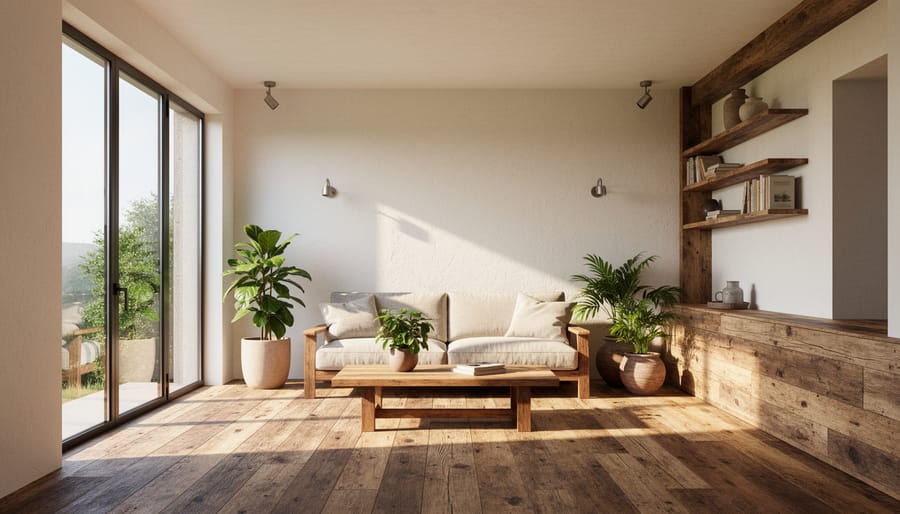
Sustainable design principles form a framework that balances environmental stewardship with functional beauty in the spaces we inhabit. At their core, these principles guide designers and homeowners toward choices that reduce harm to the planet while creating interiors that support human well-being and stand the test of time.
The foundation rests on several interconnected concepts that shape every decision, from selecting a sofa to planning an entire room. Resource efficiency asks us to use less, less energy in production, fewer raw materials, less water, without sacrificing quality or comfort. Longevity challenges the throwaway culture by prioritizing pieces built to last decades rather than seasons. Recyclability ensures that when an item does reach its end, its materials can live again rather than languish in a landfill.
- Resource Efficiency
- Using materials and energy thoughtfully throughout production and use, minimizing waste at every stage. This principle favors manufacturing processes that consume less water, generate less pollution, and optimize material yield.
- Design for Longevity
- Creating furniture and interiors built for durability, timeless appeal, and easy repair rather than planned obsolescence. Pieces designed this way remain functionally and aesthetically relevant across decades.
- Material Health
- Selecting finishes, textiles, and construction materials free from harmful chemicals that compromise indoor air quality. This principle protects both the people living with the furniture and the craftspeople who make it.
- Circular Thinking
- Designing with the entire lifecycle in mind, from responsible sourcing through eventual disassembly and material recovery. Products embrace this principle when their components can be separated, recycled, or safely returned to nature.
These aren’t abstract ideals reserved for institutional projects. When you choose a dining table crafted from reclaimed oak, you’re applying resource efficiency and longevity simultaneously. When you select upholstery fabric dyed with low-impact processes and free from flame retardants, you’re honoring material health. Each principle translates directly into tangible choices that shape the character and conscience of your home, proving that sustainability and beauty walk hand in hand.
How Sustainable Design Principles Work in Practice
Life Cycle Assessment
Life cycle assessment serves as the fundamental analytical tool that transforms sustainability from aspiration into measurable practice. When evaluating a walnut dining table, for instance, designers don’t merely consider whether walnut qualifies as a sustainable wood. They trace the material’s journey from forest to your home and beyond, quantifying environmental costs at each stage.
The assessment begins with raw material extraction, examining how the walnut was harvested, whether from managed forests or salvaged trees, and the fuel consumed in felling and milling. Next comes processing and manufacturing: the energy required to dry, shape, and finish the lumber, plus any chemical treatments applied. Transportation represents another critical factor, as a locally milled table carries a vastly different carbon footprint than one shipped across continents. A whole life cycle assessment captures these cumulative impacts, revealing the embodied energy locked into every piece.
End-of-life considerations complete the picture. Can the table be refurbished and resold? Will components disassemble for recycling, or must the entire piece go to landfill? A well-designed sustainable piece anticipates this final chapter, using mechanical fasteners instead of permanent adhesives, choosing finishes that won’t contaminate recycling streams, and selecting materials that biodegrade harmlessly or retain value for reclamation.
This rigorous evaluation often reveals surprising truths, that a vintage piece requiring restoration may prove more sustainable than new “eco-friendly” furniture manufactured overseas, or that a higher initial material cost delivers better environmental performance across decades of use.
Circular Economy Thinking

Circular economy thinking reimagines how materials flow through our homes, not as one-way journeys from factory to landfill, but as continuous cycles where nothing becomes waste. This approach has transformed furniture design in particular, with makers now creating pieces engineered for their next life from the moment they’re conceived.
The principle starts with designing for disassembly. Unlike conventional furniture assembled with permanent adhesives and hidden fasteners, circular pieces use mechanical joints, exposed screws, and modular components that come apart cleanly when their time in one configuration ends. A sofa designed this way allows you to replace a worn cushion, swap out dated fabric, or reconfigure the frame entirely, extending its useful life by decades while keeping materials out of waste streams.
Material choice reinforces this cycle. Designers working within the circular economy transition select woods, metals, and textiles that can return safely to biological or technical cycles, either biodegradable natural fibers that compost harmlessly, or pure materials like solid hardwood and unmixed metals that recycling facilities can process repeatedly without quality loss.
The closed-loop vision extends beyond individual pieces to entire supply chains. Progressive manufacturers now accept their own products back at end-of-life, harvesting materials to build new furniture. This creates accountability: when you design knowing you’ll receive your materials back, you choose durability and purity over disposable hybrids. The result is interiors filled with intentional, beautiful objects that participate in regenerative systems rather than extractive ones.
Core Categories of Sustainable Design Principles
Material Selection Principles
Material selection stands as the most tangible expression of sustainable design principles in interior spaces. The choices you make about what materials enter your home ripple outward, affecting forests, waterways, air quality, and the communities where those materials originate.
Renewable resources form the foundation of responsible material selection. Bamboo, cork, and FSC-certified wood regrow relatively quickly compared to slow-growth hardwoods, making them regenerative rather than extractive choices. Natural fibers like organic cotton, linen, hemp, and wool offer beautiful texture while biodegrading at the end of their useful life, unlike synthetic alternatives that persist in landfills for centuries.
Recycled and reclaimed materials give new purpose to existing resources. Reclaimed wood from dismantled barns carries history and character impossible to replicate, while recycled metal, glass, and plastic divert waste from landfills. These materials often develop richer patinas and visual depth than their brand-new counterparts, adding warmth and authenticity to interiors.
Low-toxicity finishes protect both indoor air quality and the craftspeople who apply them. Water-based stains, natural oils, and plant-based varnishes eliminate the volatile organic compounds found in conventional finishes. Non-toxic upholstery, free from flame retardants and formaldehyde, creates healthier living environments, particularly important in bedrooms and spaces where children spend time.
Locally sourced materials reduce transportation emissions while supporting regional economies and traditional craft. A dining table milled from timber grown within a hundred miles carries a smaller carbon footprint and connects your home to the landscape outside your windows.
Design for Longevity

Design for longevity stands as perhaps the most elegant response to overconsumption in interiors. When you invest in pieces built to last decades rather than seasons, you fundamentally shift away from the disposable mindset that burdens landfills and depletes resources.
Quality craftsmanship forms the foundation. Hand-joined wooden frames outlast glued particleboard by generations. Hardwood furniture develops character through wear rather than falling apart, and eight-way hand-tied upholstery maintains its form where foam cushions collapse. These construction methods demand higher initial costs but prove economical over time, eliminating repeated purchases.
Timeless design transcends fleeting trends. A mid-century credenza or a Chesterfield sofa remains visually relevant across decades because their proportions and details reflect enduring aesthetic principles rather than momentary fashion. Choosing such pieces means your space evolves without requiring wholesale replacement.
Modularity extends functional life. Sectional sofas reconfigure for new floor plans. Storage systems expand room by room. Adjustable shelving adapts as needs change. This flexibility keeps furniture relevant through life transitions that would otherwise render fixed pieces obsolete.
Repairability matters equally. Furniture designed with replaceable cushions, refinishable surfaces, and accessible joinery can be restored rather than discarded. Seek makers who offer replacement parts and repair services, ensuring your investment endures beyond the initial purchase into true heirloom status.
Energy and Resource Efficiency
Energy efficiency in sustainable design extends beyond the walls themselves to encompass every manufacturing decision and spatial choice. When furniture makers invest in solar-powered facilities or optimize production lines to reduce machine idle time, they cut energy consumption dramatically, sometimes by 40 percent or more compared to conventional workshops. Water-conserving finishing techniques, like powder coating instead of liquid stains, eliminate gallons of waste while delivering durable results.
Inside the home, strategic furniture placement becomes an efficiency tool. A tall bookshelf on an exterior wall adds insulation value. Positioning a sofa away from heating vents allows warm air to circulate freely rather than being blocked and wasted. Light-colored upholstery and reflective surfaces amplify natural daylight, reducing artificial lighting needs during the day.
Material choices carry efficiency implications too. Dense hardwoods retain temperature better than particle board, helping stabilize room climates. Natural fiber rugs insulate floors without off-gassing the volatile compounds that compromise indoor air and require extra ventilation. Even the decision to buy one well-made piece instead of replacing cheaply made furniture every few years conserves the cumulative energy embedded in repeated manufacturing, shipping, and disposal cycles.
Health and Wellness Principles
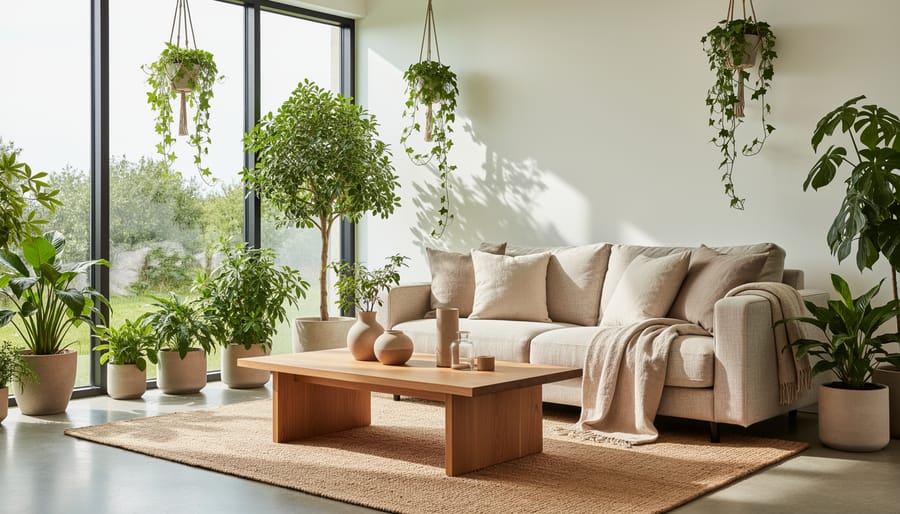
Sustainable design prioritizes the health of people who inhabit a space, recognizing that the materials and elements surrounding us directly affect our physical and mental well-being. Indoor air quality stands as a primary concern: off-gassing from synthetic materials, adhesives, and finishes can introduce volatile organic compounds (VOCs) that compromise respiratory health and cognitive function. Selecting low-VOC or zero-VOC paints, natural fiber textiles, and solid wood furniture eliminates these hidden pollutants, creating cleaner air that supports long-term wellness.
Natural light optimization forms another pillar of health-focused design. Strategic furniture placement that doesn’t block windows, the use of light-reflective surfaces, and sheer window treatments maximize daylight penetration, regulating circadian rhythms and improving mood. This reduces reliance on artificial lighting while creating more vibrant, energizing interiors.
Biophilic design elements, incorporating natural materials like wood and stone, adding plants, and establishing visual connections to outdoor spaces, tap into our innate need for nature. These elements lower stress, enhance concentration, and foster a sense of calm. When combined with non-toxic finishes and thoughtful spatial planning, health-centered principles transform interiors into nurturing environments that actively support human flourishing.
How These Principles Are Applied in Interior Spaces
Sustainable Furniture Selection
Selecting furniture that honors sustainable design principles begins with understanding material provenance and maker values. Look for pieces crafted from FSC-certified wood, which ensures responsible forest management, or choose reclaimed timber that carries both environmental integrity and rich patina. Natural textiles, linen, organic cotton, wool, hemp, offer durability and biodegradability that synthetic alternatives can’t match, while avoiding the chemical treatments that compromise indoor air quality.
Vintage and antique pieces represent the ultimate sustainability: they’ve already proven their longevity, require no new resource extraction, and add character impossible to replicate in mass production. Auction houses and estate sales yield exceptional finds that bring history into contemporary spaces. Many innovative modern houses masterfully blend vintage discoveries with new sustainable pieces, creating layered interiors that feel both timeless and fresh.
When buying new, research makers committed to ethical production practices: transparent supply chains, fair labor standards, low-waste manufacturing. Ask direct questions about materials, finishes, and construction methods. Quality craftsmanship, visible joinery, solid hardwood frames, natural fiber cushioning, signals furniture built to last decades rather than seasons. Choose pieces designed for repair and reupholstery rather than disposal. Modularity extends usefulness as needs change. This selective, thoughtful approach to furniture acquisition transforms consumption into curation, building interiors that reflect both personal style and environmental responsibility.
Whole-Room Integration
Transforming a room through sustainable design requires orchestrating multiple elements into a harmonious whole. Start with flooring, reclaimed hardwood, natural cork, or wool carpets establish an ecological foundation while providing warmth and texture. Layer in wall treatments: low-VOC paints in earthy tones, natural plaster finishes, or grasscloth wallcoverings made from renewable fibers create visual interest without compromising indoor air quality.
Lighting choices amplify sustainability: maximize natural light through thoughtful window treatments in organic linen or hemp, then supplement with LED fixtures crafted from recycled metals or responsibly sourced wood. Consider vintage chandeliers or handmade ceramic pendants that add character while eliminating new manufacturing impact.
Textiles offer perhaps the richest opportunity for sustainable layering. Upholster vintage chairs in organic cotton or deadstock fabric, drape windows with curtains woven from recycled materials, and scatter cushions covered in hand-blocked linen across a sofa. These soft layers bring comfort and color while reinforcing your environmental commitment.
Accessories complete the narrative: display ceramics from local artisans, arrange botanicals in reclaimed glass vases, and curate art pieces that reflect nature’s beauty. Drawing from 2026 design inspiration the most compelling sustainable interiors feel effortlessly cohesive, each element supporting the others to create spaces where environmental responsibility and sophisticated aesthetics become indistinguishable.
Common Questions About Sustainable Design Principles
Does sustainable design cost more than conventional design?
Initial investment can be higher for certain sustainable materials and certified products, but the long-term value often offsets upfront costs through durability, timeless appeal, and lower maintenance. Many sustainable choices, vintage finds, locally made pieces, and natural materials, offer excellent value at various price points.
How do I verify that products are genuinely sustainable?
Look for third-party certifications like FSC for wood, GOTS for textiles, and Cradle to Cradle for holistic environmental assessment. These independent standards provide transparent verification that products meet rigorous sustainability criteria beyond marketing claims.
Will sustainable design limit my aesthetic choices?
Quite the opposite. Sustainable materials offer rich textures, varied finishes, and authentic character that mass-produced alternatives can’t replicate. From reclaimed timber’s weathered patina to the soft drape of organic linen, these materials expand rather than constrain design possibilities.
Where can I find sustainable furniture and materials?
Start with artisan makers, vintage dealers, and companies transparent about their supply chains and manufacturing processes. Many online platforms now curate sustainable collections, and you can connect with designers who specialize in sourcing eco-conscious materials and furnishings for residential projects.
The learning curve for sustainable design flattens quickly once you understand the core principles. Cost concerns typically center on comparing conventional retail prices to artisan or certified sustainable pieces without accounting for longevity, a well-made solid wood chair may cost more initially than particleboard furniture but will outlast it by decades. The real challenge isn’t expense but shifting mindset from disposable consumption to investment in quality.
Sourcing becomes easier as you build relationships with makers and suppliers who share your values. Local craftspeople, salvage yards, and vintage markets yield unique pieces with minimal environmental footprint, while their imperfections and history add character commercial retailers can’t manufacture. The hunt itself becomes part of the design journey, connecting you more deeply to the objects that shape your space.
Sustainable design principles are not distant aspirations reserved for large-scale commercial projects, they are practical, beautiful choices you can integrate into your home today. Every material you select, every piece of furniture you bring through your door, and every decision about longevity over trends contributes to spaces that honor both the planet and your personal aesthetic vision. The principles explored throughout this guide offer a roadmap for creating interiors that feel inspired, intentional, and deeply connected to environmental values.
You don’t need to overhaul everything at once. Start with one room, one thoughtful furniture choice, or one conversation with designers who specialize in sustainable approaches. If you’re working with professionals, ask about their commitment to these principles and explore interior design services that prioritize eco-conscious solutions. When you’re ready to furnish, you can shop sustainably on deals by choosing quality pieces built to last rather than disposable trends.
For ongoing inspiration, expert insights, and exclusive content from international designers pioneering sustainable interiors, subscribe to our monthly newsletter. Discover how beautiful, responsible design is shaping homes around the world, and how you can bring those same principles into your own space.